How to Minimize Wood Waste on Plywood & MDF
Sheet goods like Baltic Birch plywood and high-density MDF are expensive. If you approach a 4x8 sheet without a mathematically optimized plan, you are literally turning your hard-earned money into useless scrap wood.
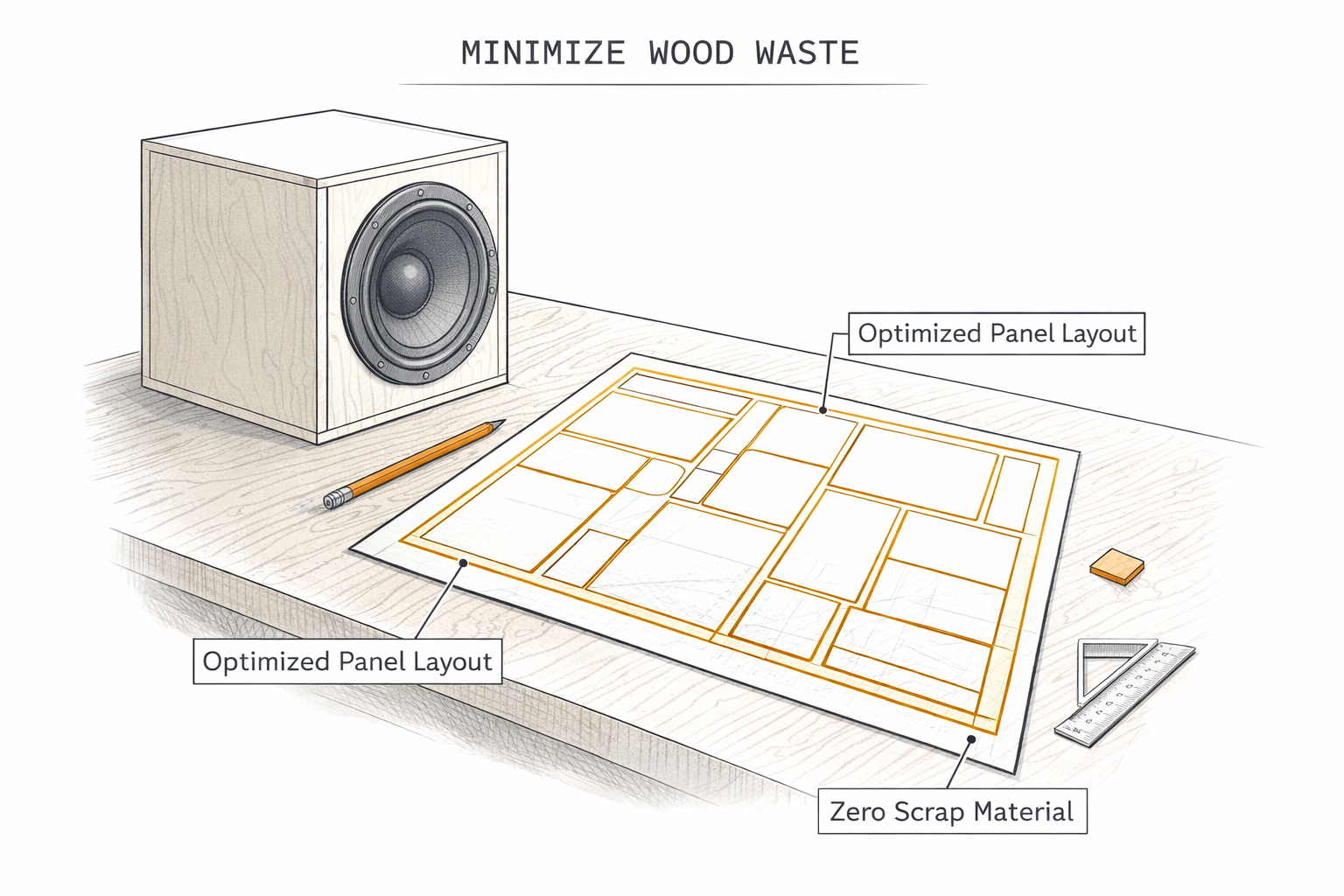
The Problem with "Grid Paper Planning"
For decades, woodworkers and DIY audio enthusiasts have designed their projects using grid paper. They draw a large rectangle representing their plywood, and then sketch smaller rectangles inside it for their parts.
The problem is that the human brain is terrible at solving complex spatial puzzles involving dozens of varying dimensions. This is mathematically known as the 2D Bin Packing Problem. When you plan on paper, you almost always:
- Forget to subtract the saw kerf thickness.
- Create a layout that is physically impossible to cut on a table saw without stopping halfway through a board.
- Leave awkward, L-shaped offcuts that are useless for future projects.
The Solution: Algorithmic Optimization
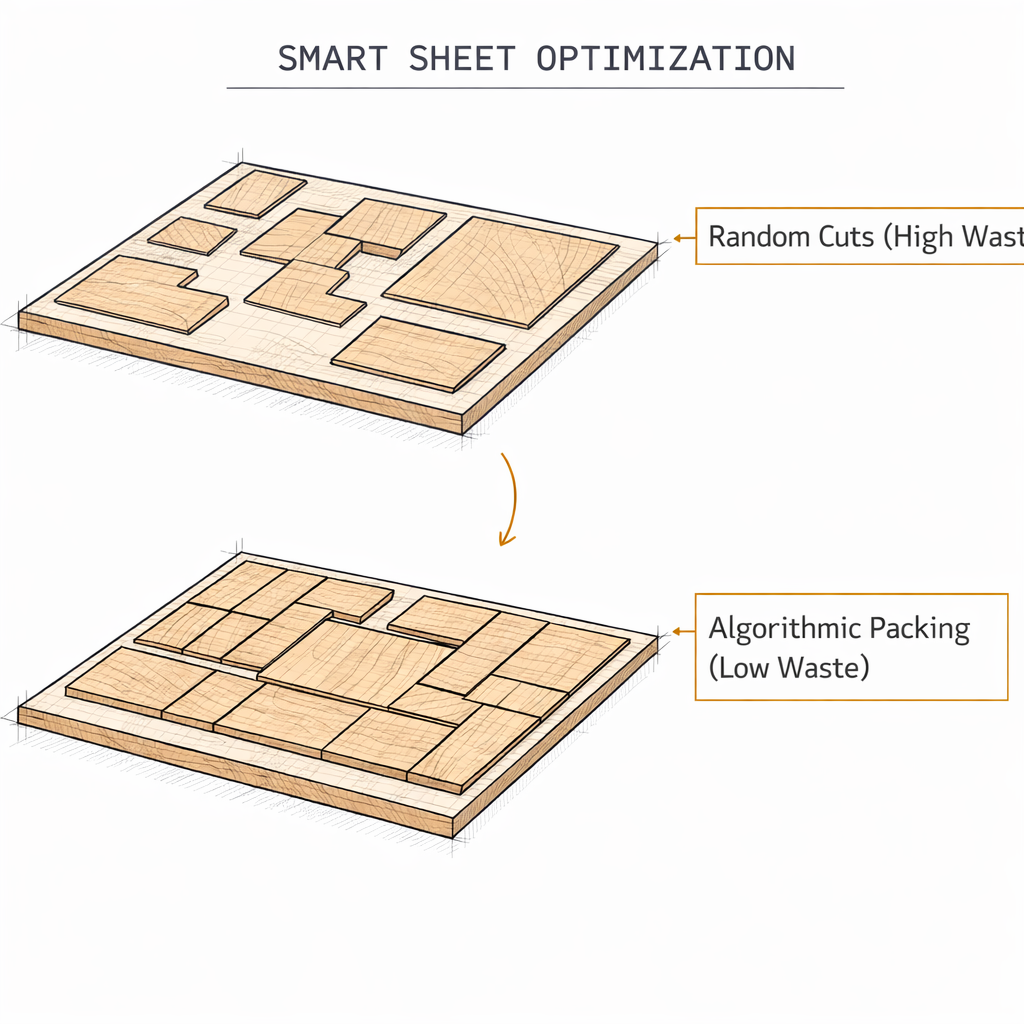
Instead of guessing, modern cabinet makers and speaker builders use software algorithms to pack their parts onto standard sheets. These algorithms test thousands of different rotational combinations in milliseconds to find the single layout that yields the highest material efficiency (often pushing 90% to 95% usage).
If you are using our speaker box calculator to design a massive 15-inch ported subwoofer, you might need 8 to 12 different wooden panels. An algorithm can instantly tell you if you can squeeze all those parts onto a single sheet of MDF, or if you need to buy two.
3 Rules for Maximum Efficiency
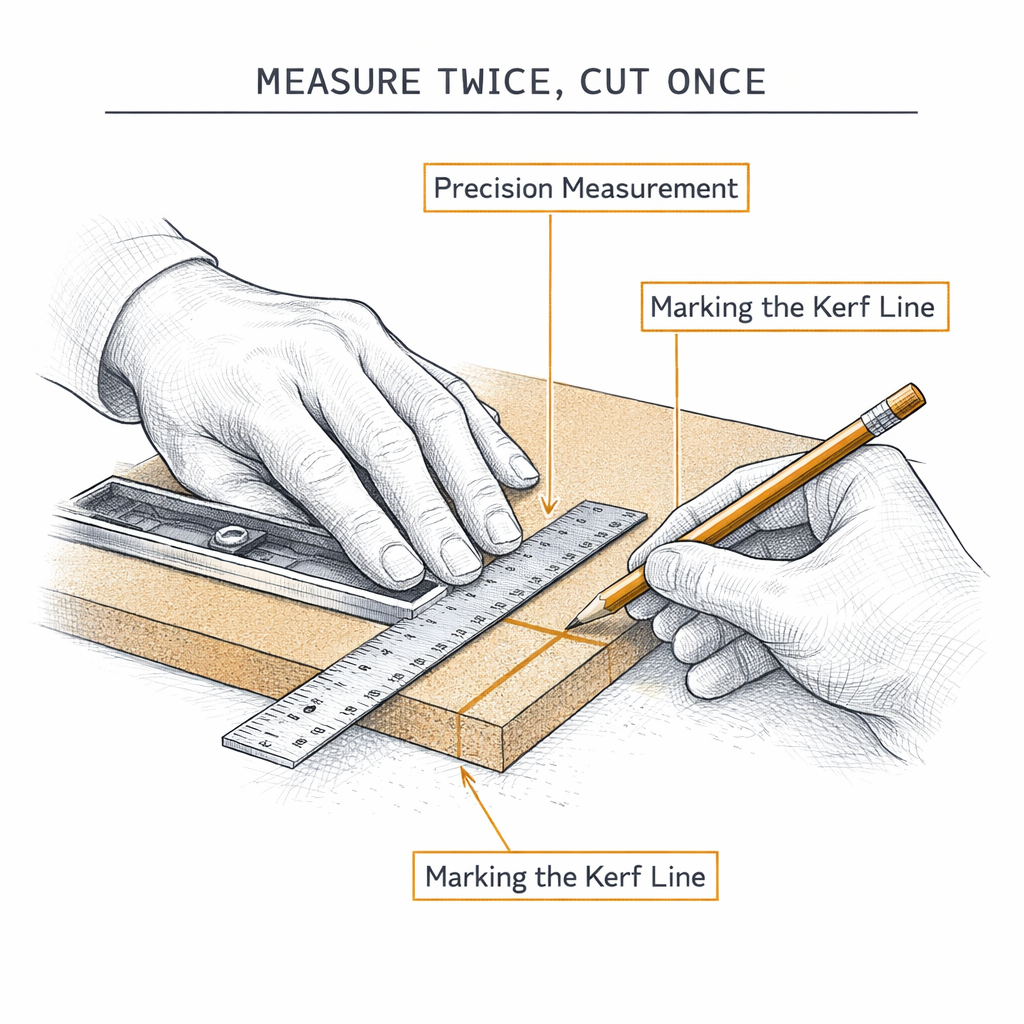
Even with software, following these three workshop rules will drastically reduce your wood waste:
1. Edge Trimming
Factory edges on plywood are rarely perfectly straight. Always plan to trim 1/4" to 1/2" off the entire perimeter of the sheet before making your final cuts.
2. Grain Direction
If you are building furniture with oak veneer, you must align the grain. This reduces optimization efficiency but ensures your final piece looks professional. (MDF does not have grain, so parts can be rotated freely).
3. The Strip Method
Layout your parts in continuous lengthwise strips (rip cuts) first, then chop them to their final length (cross cuts). This ensures your offcuts are large, usable rectangles rather than odd shapes.
Stop Wasting Wood & Money
Throw away the grid paper. Our free plywood cutlist optimizer uses an advanced bin-packing algorithm to generate the most efficient workshop layout possible. It automatically accounts for your saw kerf, edge trims, and creates a practical table-saw workflow.