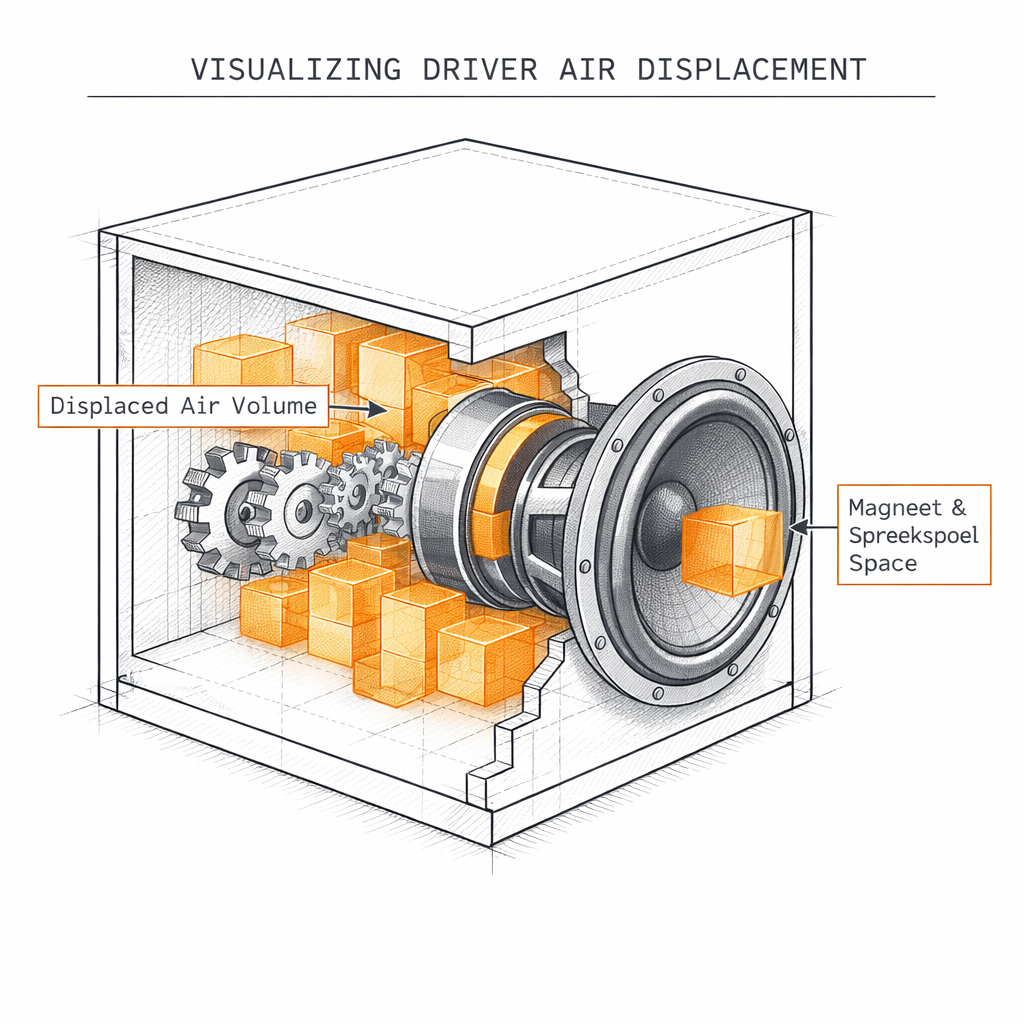
Speaker Box Calculator & Subwoofer Designer
Design the perfect acoustic enclosure. Calculate internal speaker volume based on your subwoofer box simulation, account for driver displacement, and instantly generate 3D assembly plans and MDF cut dimensions.
Launch Free Calculator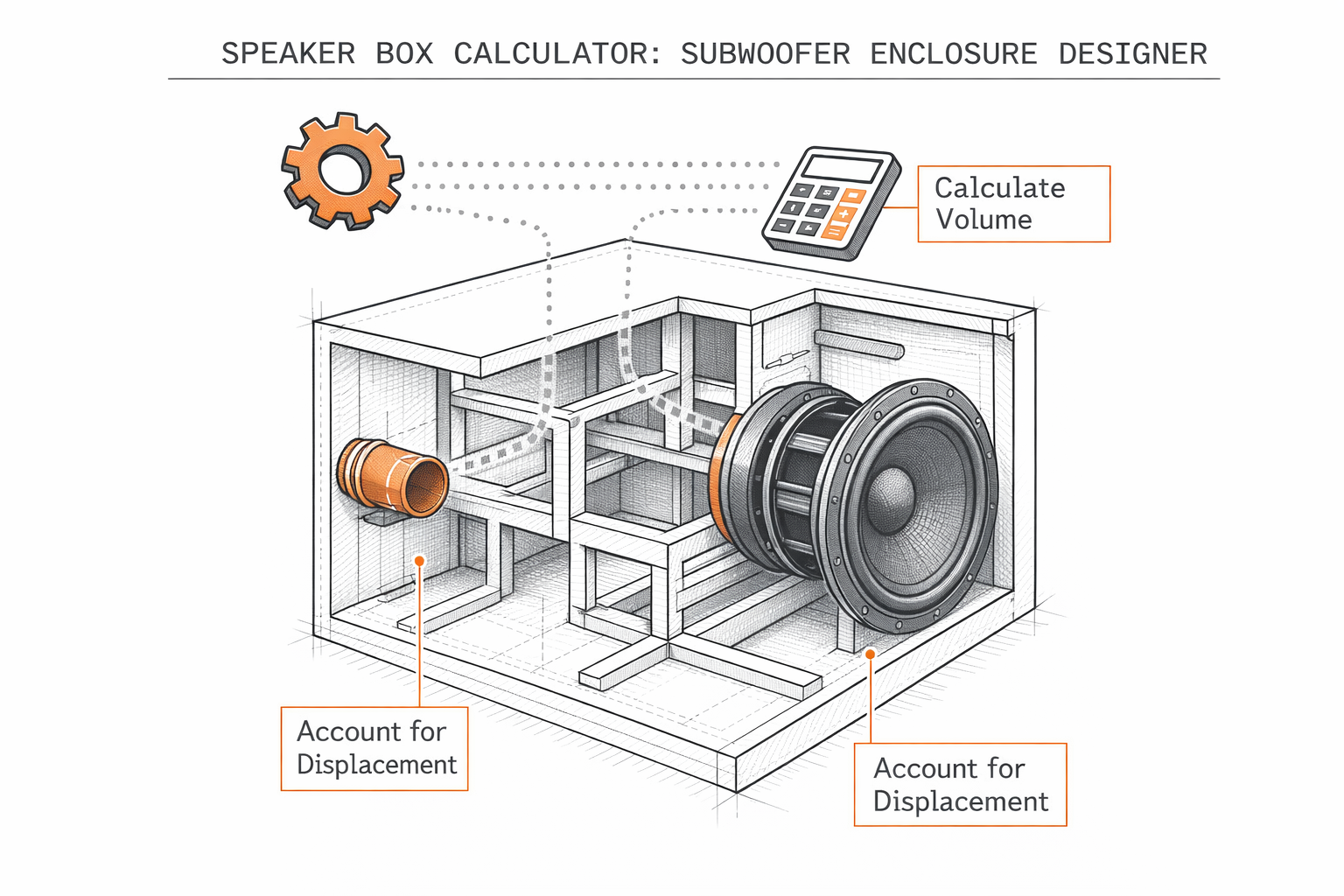
Why Use This Design Software?
- Calculate Net Volume (subtracts ports & drivers)
- Visual 3D assembly case models
- Direct export to our Cutlist Optimizer
Powerful Features for DIY Audio Builders
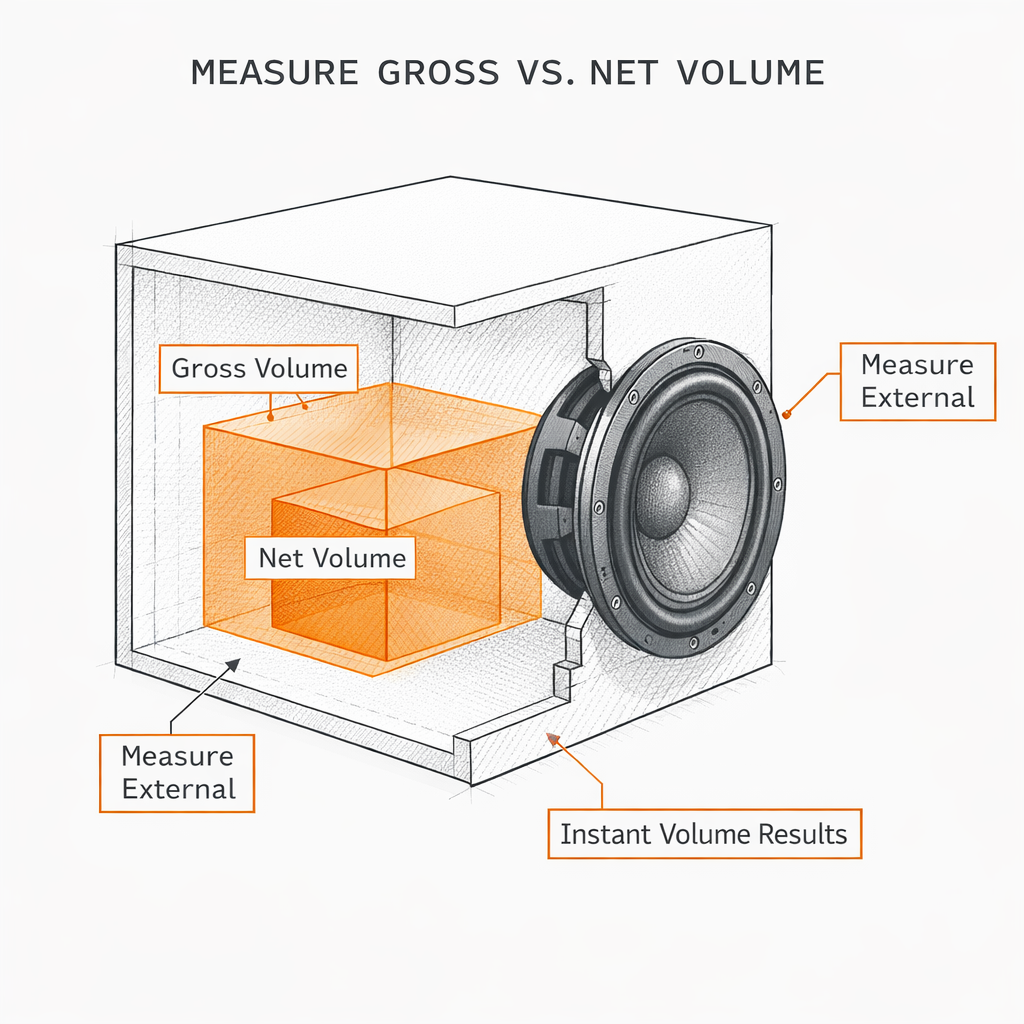
Accurate Volume Calculation
Stop guessing your internal air space. Enter your external dimensions and material thickness (e.g., 3/4" MDF), and our calculator instantly provides the exact gross and net volume in Liters or Cubic Feet.
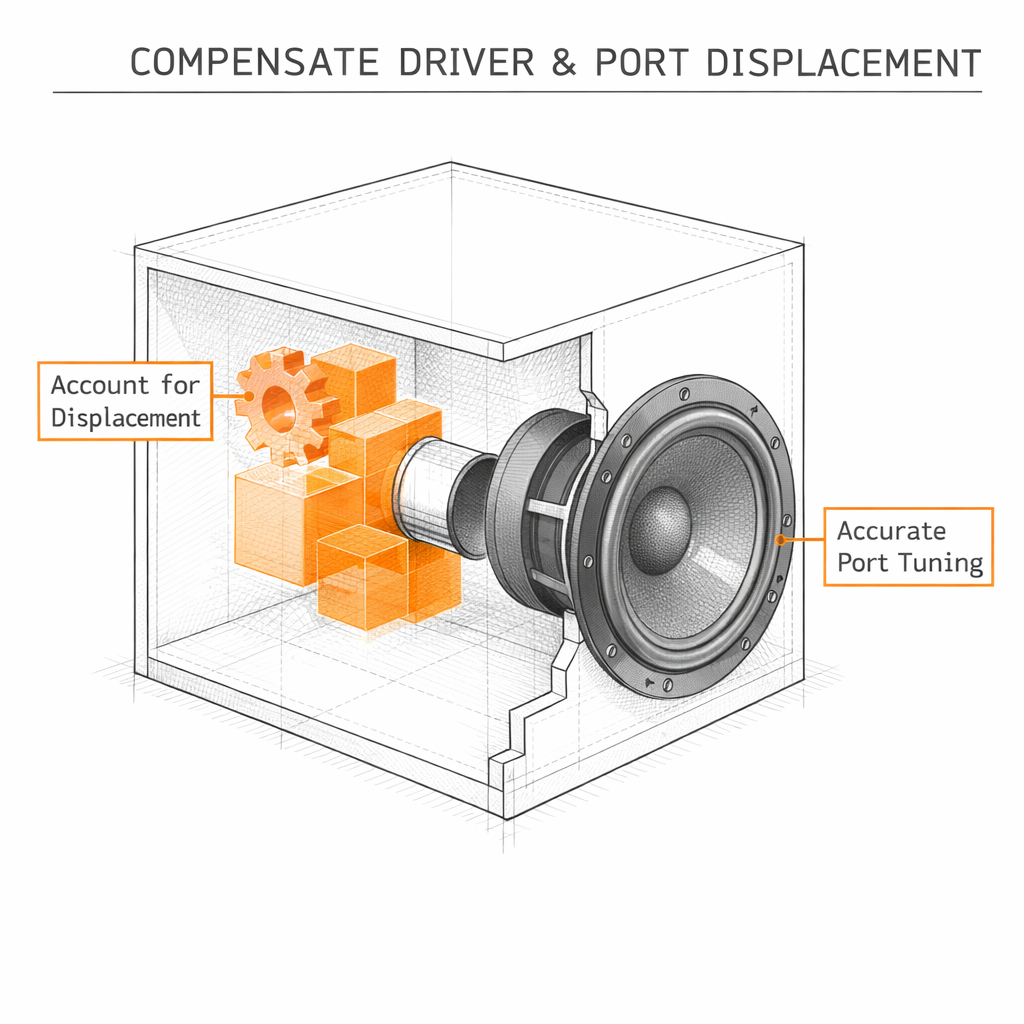
Driver & Port Displacement
A massive 12-inch or 15-inch subwoofer magnet takes up valuable air space inside your box. Our tool automatically calculates driver, port, and bracing displacement to ensure your tuning remains perfectly accurate.
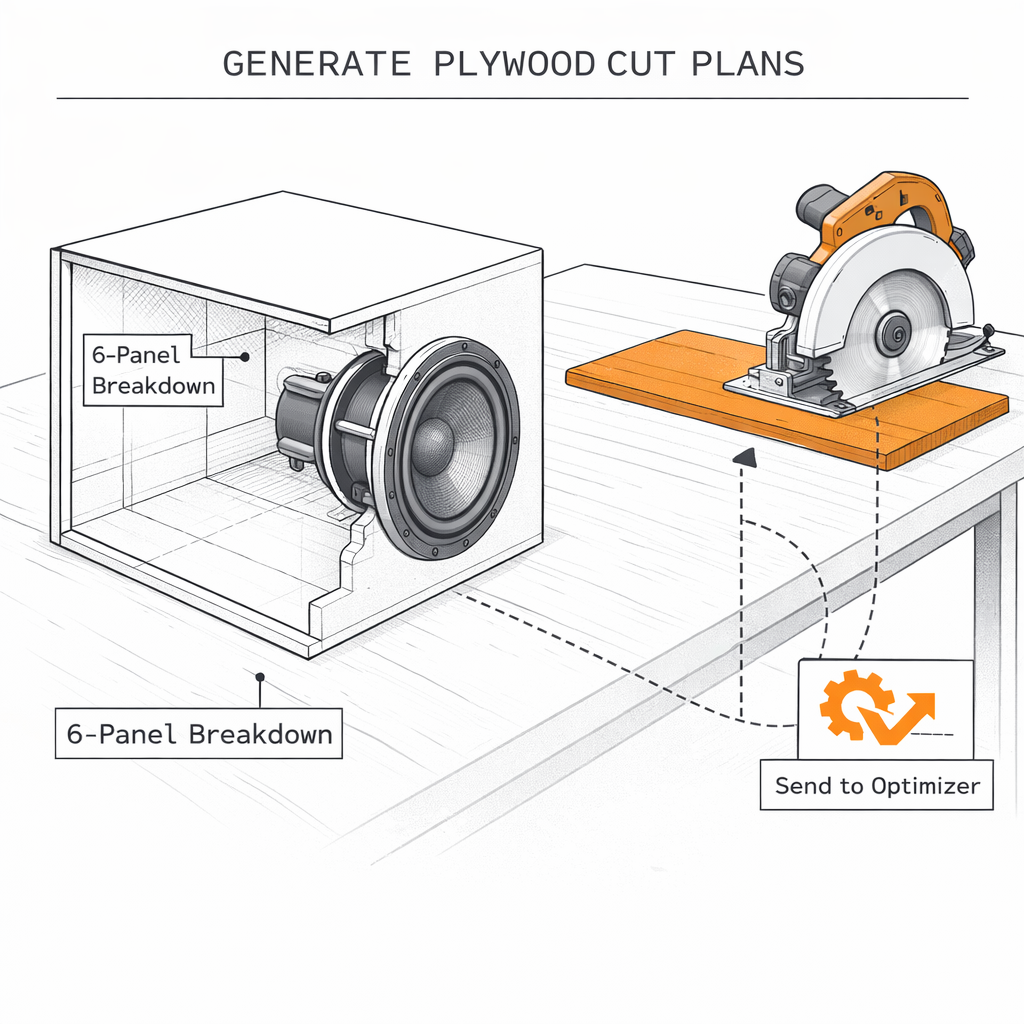
Instant Cut List Generation
Once your subwoofer box design is complete, view the 6-panel dimension breakdown. With one click, send your exact panel dimensions directly to our MDF cut list generator to optimize your wood sheet layouts.
Frequently Asked Questions
The required internal volume depends entirely on the Thiele-Small (T/S) parameters of your specific speaker driver. Generally, an 8-inch subwoofer might need 0.5 to 1.0 cubic feet, a 10-inch might need 1.0 to 1.5 cu ft, and a 12-inch or 15-inch driver often requires 2.0 to 3.0+ cubic feet.
Always consult the spec sheet provided by the manufacturer (like Dayton Audio, Skar, or Rockford Fosgate) for the recommended sealed or ported box volumes before starting your build.