Thiele-Small (T/S) Parameters Calculator & Database

Decode your subwoofer specs. Input your speaker parameters to calculate the optimal enclosure volume, or save your favorite drivers to your personal audio database before moving to our online Subwoofer Box Simulator.

Launch Parameters Wizard
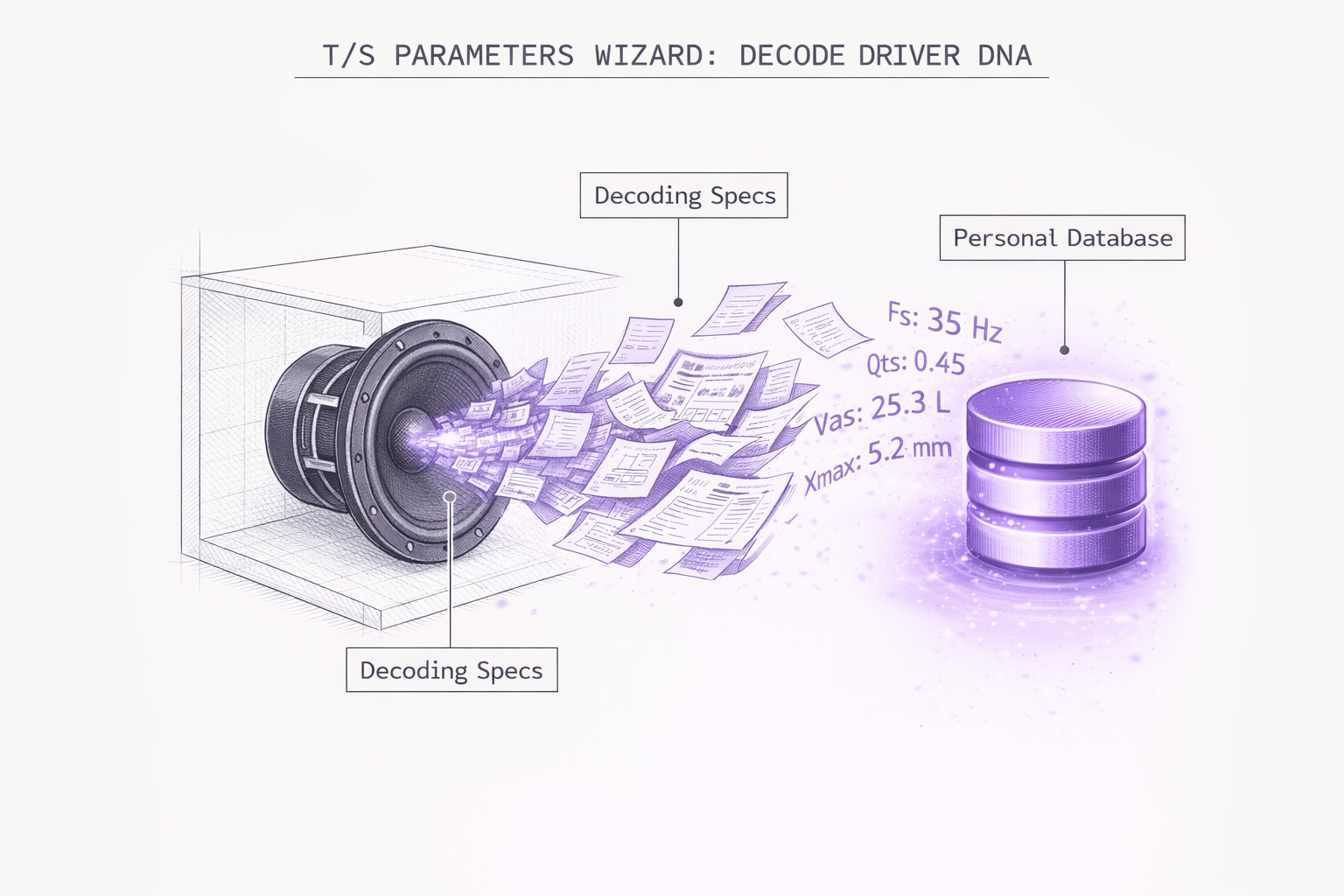
Technical drawing of the T/S Parameters Wizard decoding a speaker driver into a database

Why use this Wizard?

  • Calculate optimal Vb (Net Volume) & Fb (Tuning)
  • Data integrity checks for missing specs
  • Seamless integration with the Box Simulator

Speaker Parameters Made Simple
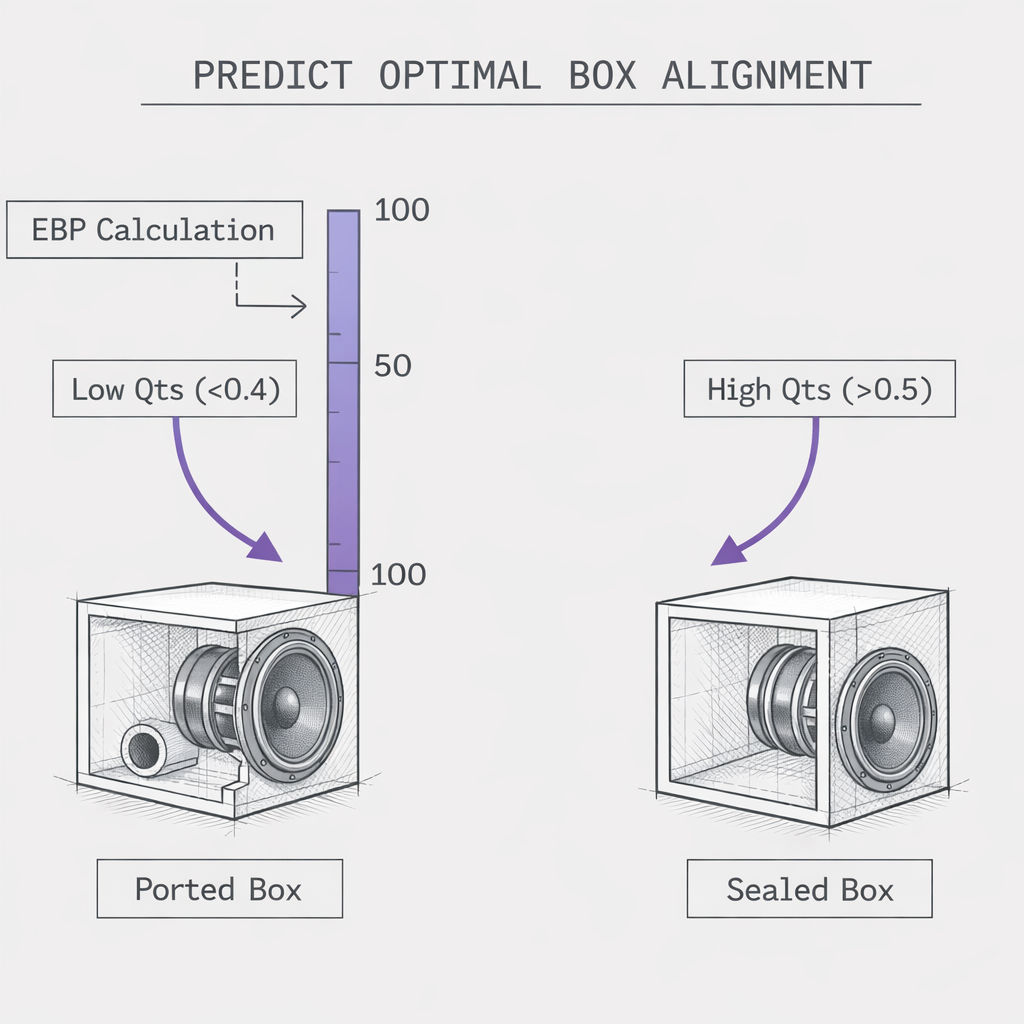
Diagram showing Qts determining sealed or ported box recommendations

Smart Enclosure Predictions

Not sure if your driver belongs in a sealed or ported box? Enter the Fs, Qts, and Vas, and our calculator will use the Efficiency Bandwidth Product (EBP) to recommend the best acoustic alignment before you test it in our speaker frequency response simulator.
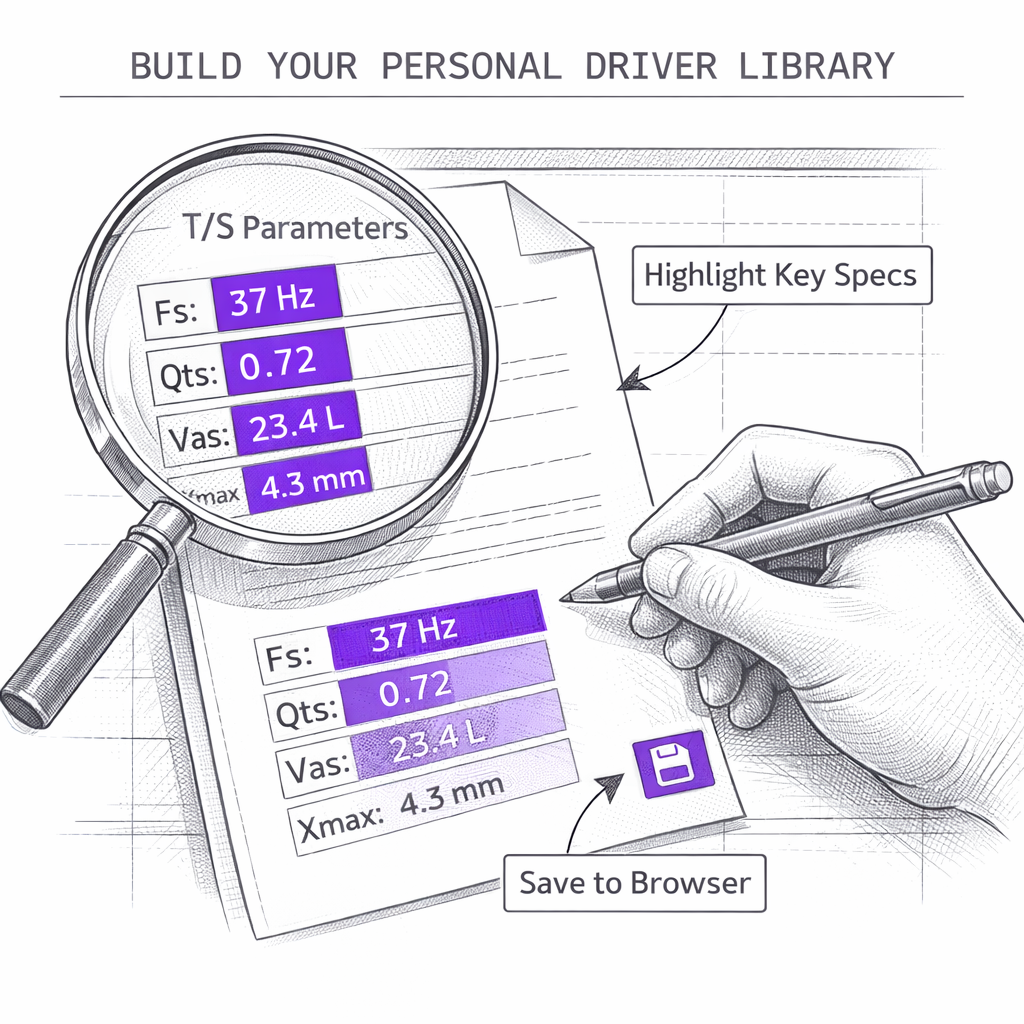
Illustration of a magnifying glass highlighting specs on a driver data sheet for saving

Personal Subwoofer Database

Stop searching for the same spec sheets over and over. Load sample drivers or save your own custom speaker parameters to your local browser storage for quick access during future projects.
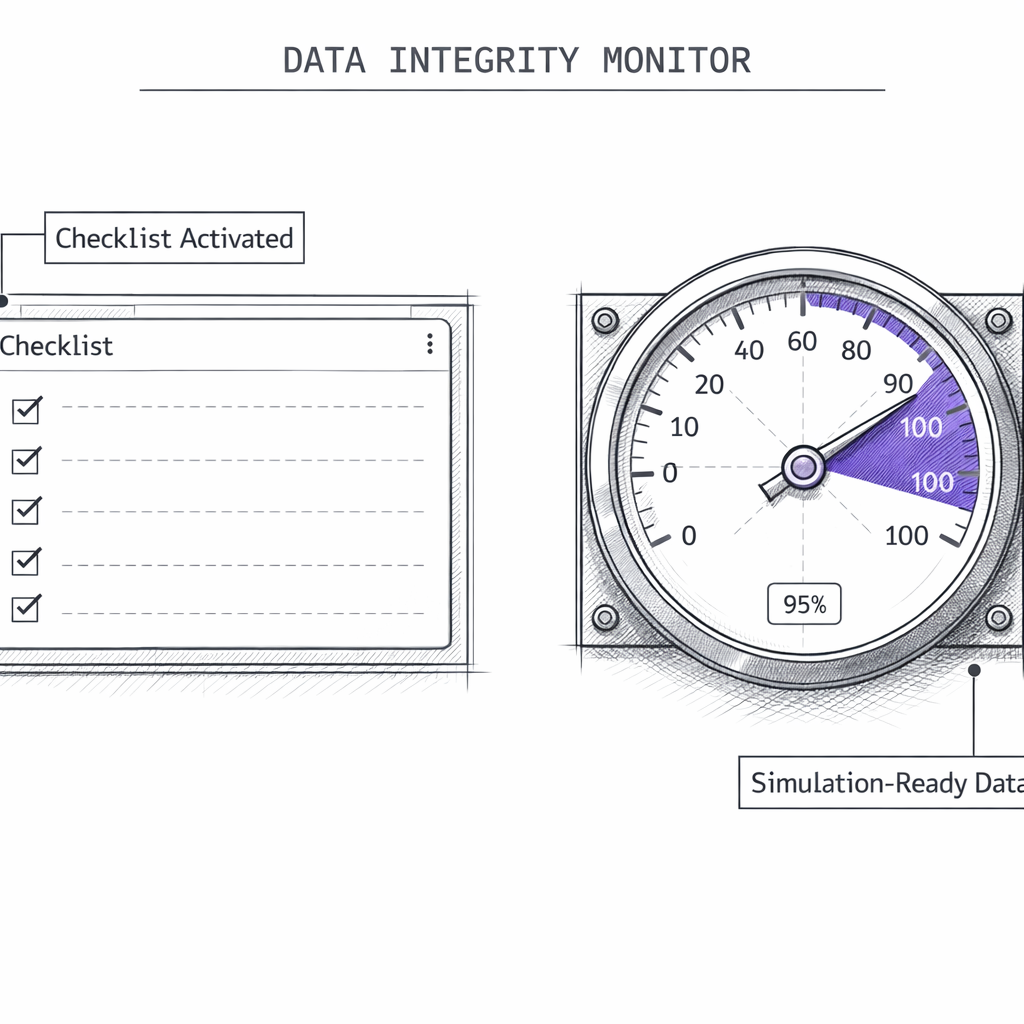
Illustration of a technical data quality monitor with checklist and simulation gauge

Data Integrity Checks

Manufacturers often provide incomplete data sheets. Our wizard actively monitors your inputs and warns you if crucial mechanical limits (like Xmax) or electrical specs (like Re) are missing before you start simulating.

Speaker Parameters Explained (FAQ)
Thiele-Small parameters are a set of electromechanical specifications that define how a speaker driver behaves at low frequencies. Named after A. Neville Thiele and Richard H. Small, these numbers are absolutely critical for designing a subwoofer enclosure. Without them, you are simply guessing the volume when using a Speaker Box Calculator.

Fs stands for the free-air resonant frequency of a speaker. It is the frequency at which the moving parts of the speaker (the cone, surround, and spider) naturally want to vibrate. Generally, a lower Fs (e.g., 25Hz) means the subwoofer is better suited for deep bass reproduction.

The 'Q' parameters measure the suspension and 'brakes' of the speaker at its resonant frequency. Qms is the mechanical damping (the stiffness of the spider and surround). Qes is the electrical damping (the strength of the magnet and voice coil). Qts is the Total Q of the driver. A Qts below 0.4 usually indicates a driver best suited for a ported (vented) box, while a Qts above 0.45 is often better for a sealed box. You can visually compare both box types in our box simulator software.

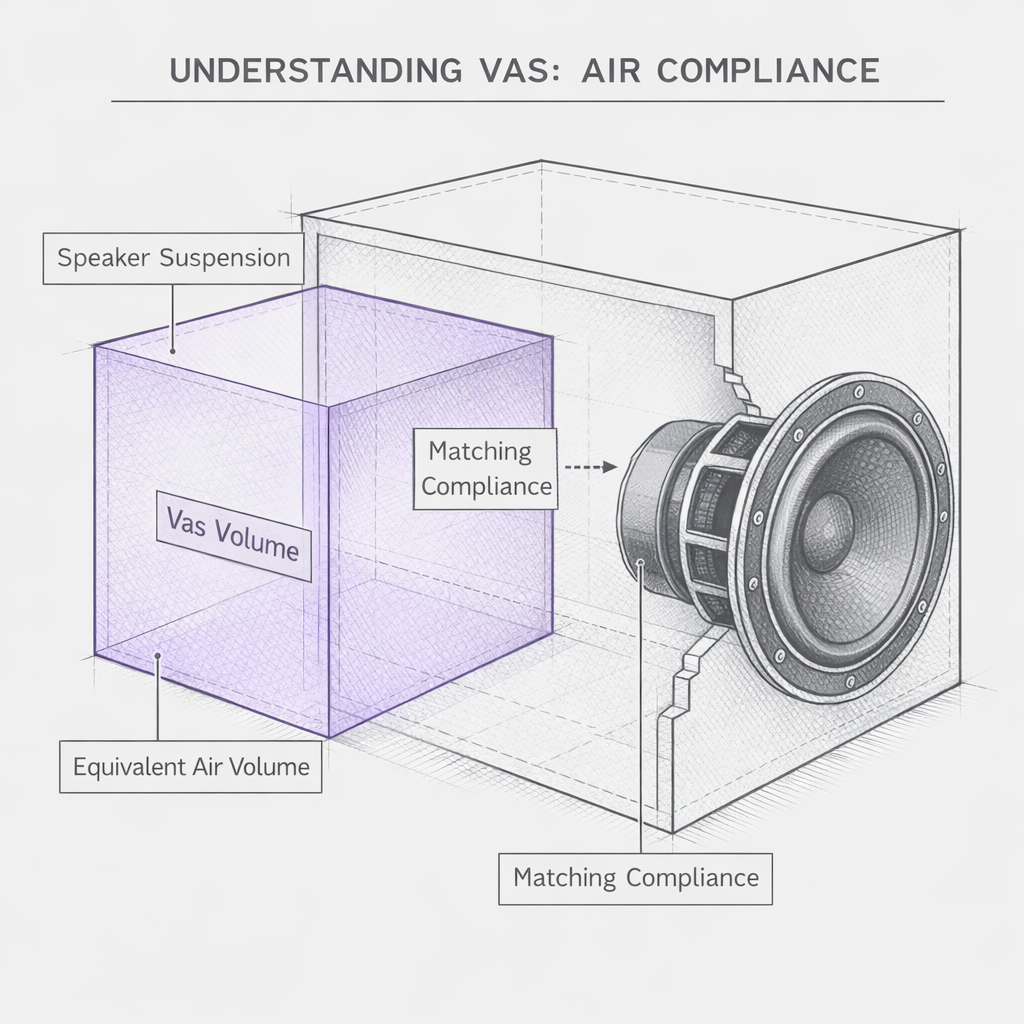
Cutaway diagram comparing speaker suspension to an equivalent volume of air
Vas represents the volume of air that has the exact same 'stiffness' or compliance as the speaker's own suspension. Measured in Liters or Cubic Feet, Vas helps calculators determine how large the physical speaker box needs to be. Once you know your required volume, use our Subwoofer Enclosure Designer to determine your exact external wood dimensions.