What is Saw Kerf in Woodworking?
It is the most common mistake made by beginners. You measure your wood perfectly, draw your lines, make your cuts, and suddenly your final pieces are too small. The culprit? You forgot about the saw kerf.
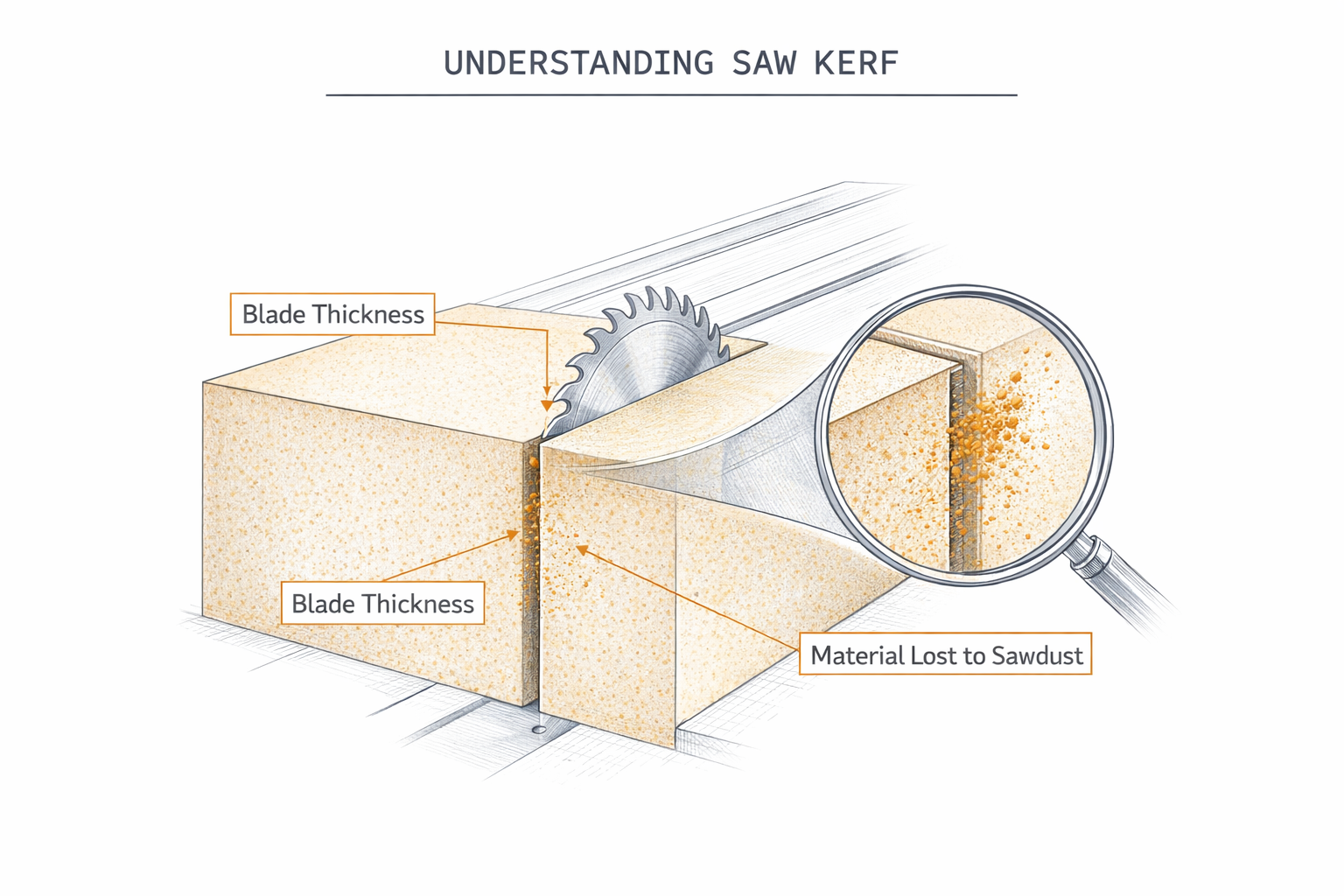
The Definition of Kerf
In woodworking, kerf refers to the width of the cut made by a saw blade. When a blade passes through a piece of wood, it does not magically separate the material; it physically grinds a section of the wood into sawdust.
The kerf is essentially the table saw blade thickness plus the slight outward bend of the blade's carbide teeth (which prevents the blade from getting stuck in the wood).
Standard Blade Thicknesses
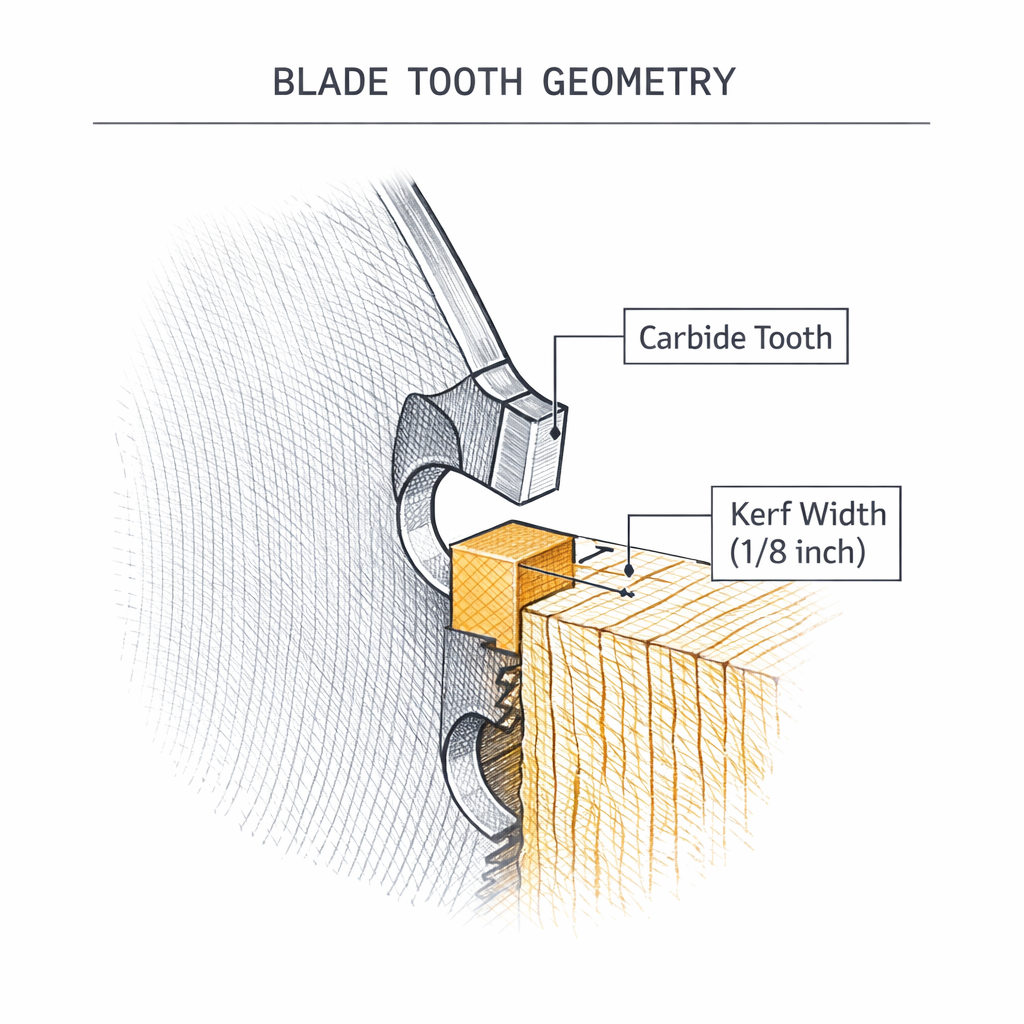
Not all blades are created equal. Depending on the tool you are using, the amount of woodworking waste generated per cut will vary:
Full-Kerf Blades
Typically measuring 1/8 inch (3.175 mm) thick. These are heavy-duty blades that do not flex or wobble easily, ensuring perfectly straight, precision cuts. However, they turn more of your expensive material into dust and require a more powerful table saw motor.
Thin-Kerf Blades
Typically measuring 3/32 inch (2.38 mm) thick. These blades remove less material and are perfect for underpowered job-site table saws. Because they are thinner, they can sometimes flex slightly on dense hardwoods, but they save more of your actual wood.
Why Kerf Ruins Bad Cutlist Planning
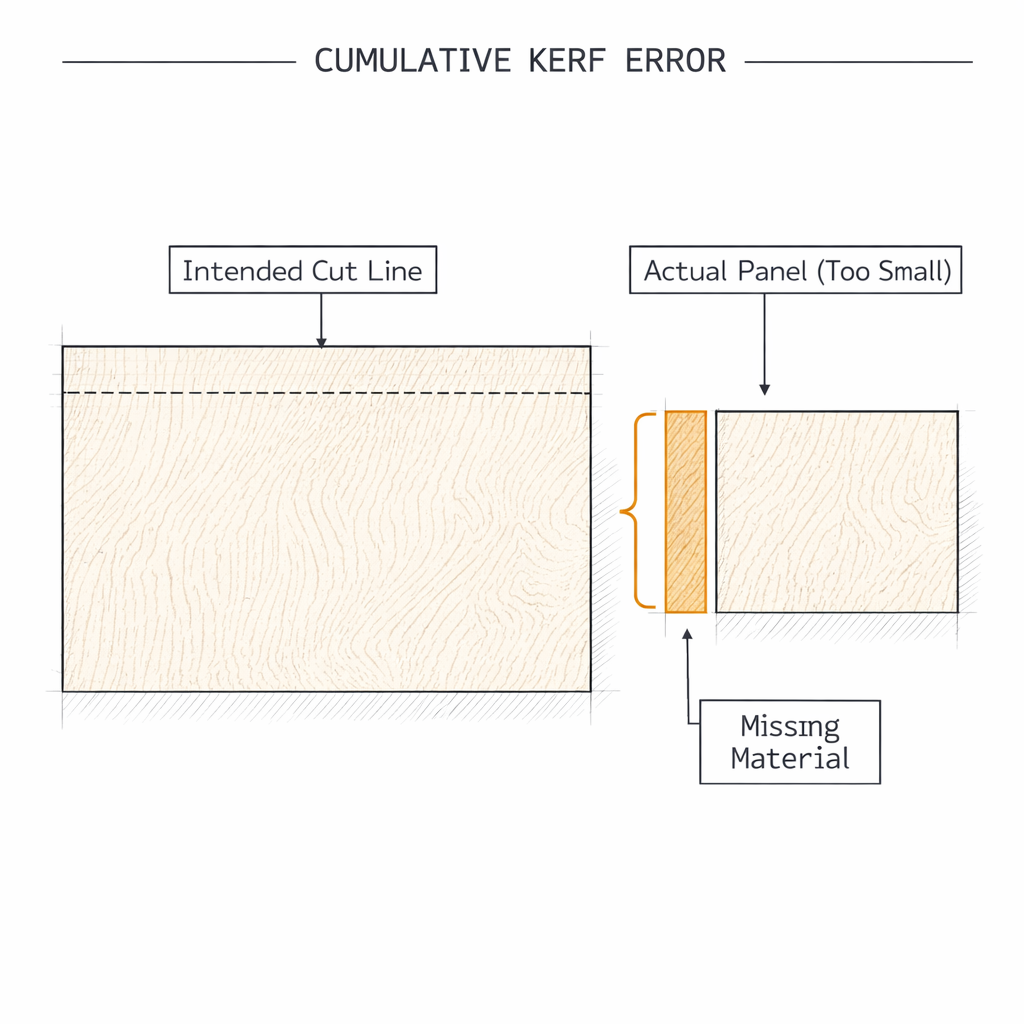
Let’s look at a practical example. Imagine you have a board that is exactly 30 inches long. You need three pieces that are exactly 10 inches long.
If you draw two pencil lines at 10" and 20" and cut directly down the middle of those lines using a standard 1/8" blade, you will lose 1/4" of total material to sawdust (two cuts × 1/8"). Your final piece will only be 9.75 inches long! This is why manual cutlist planning on a piece of grid paper almost always leads to wasted material and ruined projects.
If you are using our speaker box design software to build an airtight enclosure, being off by an eighth of an inch means your panels won't glue up properly, ruining the acoustic seal.
Stop Doing the Kerf Math Manually
Do not let the blade thickness ruin your expensive plywood. Use our free cutlist optimizer. Simply enter the dimensions of the parts you need, specify your exact saw kerf (e.g., 3.175mm or 0.125"), and our algorithm will generate a perfect layout that accounts for every millimeter of sawdust.
Generate Precision Cutlist