What Are Thiele-Small Parameters? A Beginner's Guide to Fs, Qts, and Vas
If you are building a custom subwoofer enclosure, you cannot simply guess the box size. You need to understand the mechanical and electrical "DNA" of your speaker.
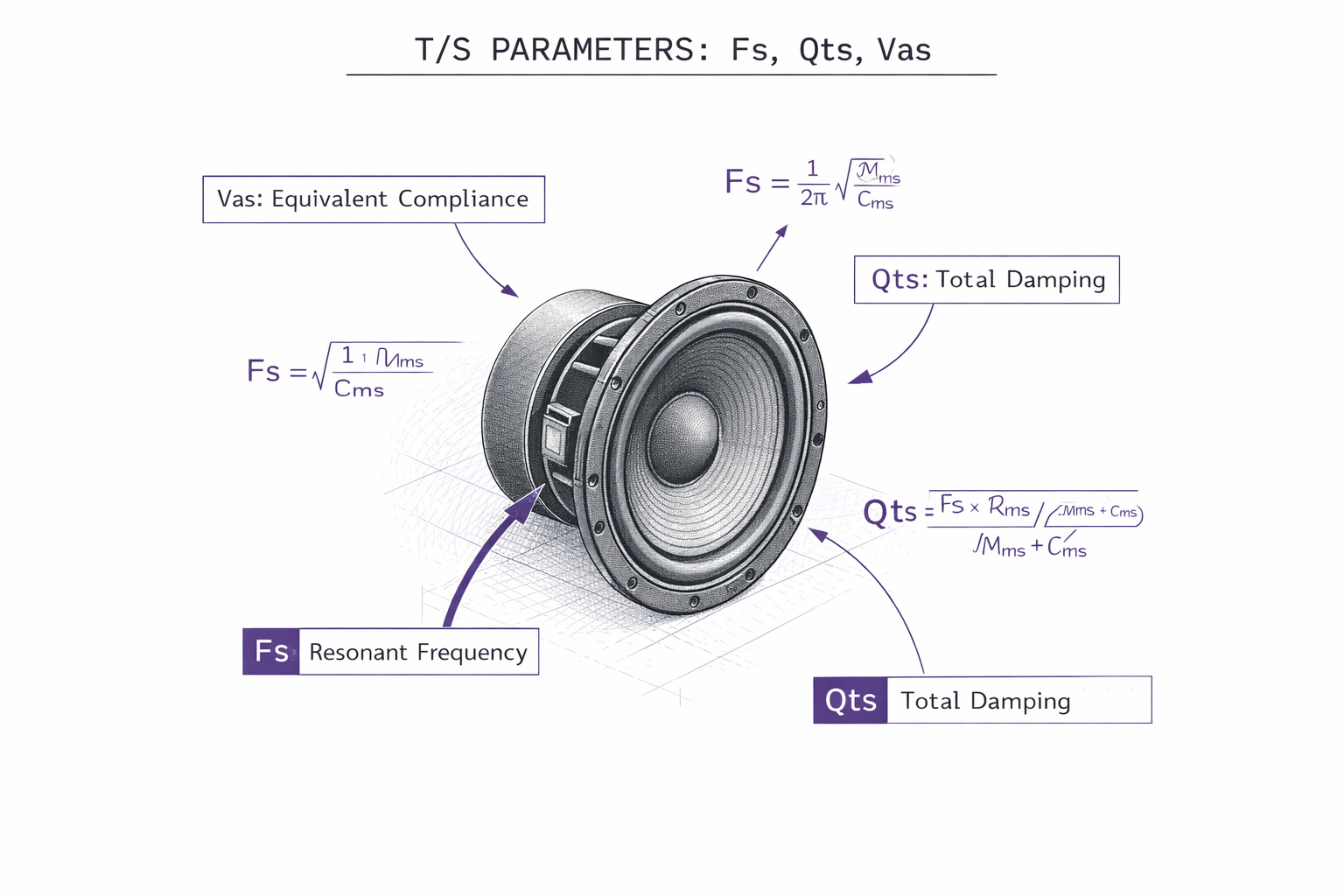
The Origin of Subwoofer Specs
Thiele-Small (T/S) parameters are a set of electromechanical specifications that define how a speaker driver behaves at low frequencies. Named after their creators, A. Neville Thiele and Richard H. Small, these metrics turned speaker enclosure design from a guessing game into a precise science.
Without these subwoofer specs, it is impossible to predict how a driver will sound in a sealed or ported box.
The "Big Three" Speaker Driver Parameters
While a full spec sheet contains over a dozen values, there are three primary parameters you must know to calculate a basic enclosure volume.
1. Fs (Resonant Frequency)
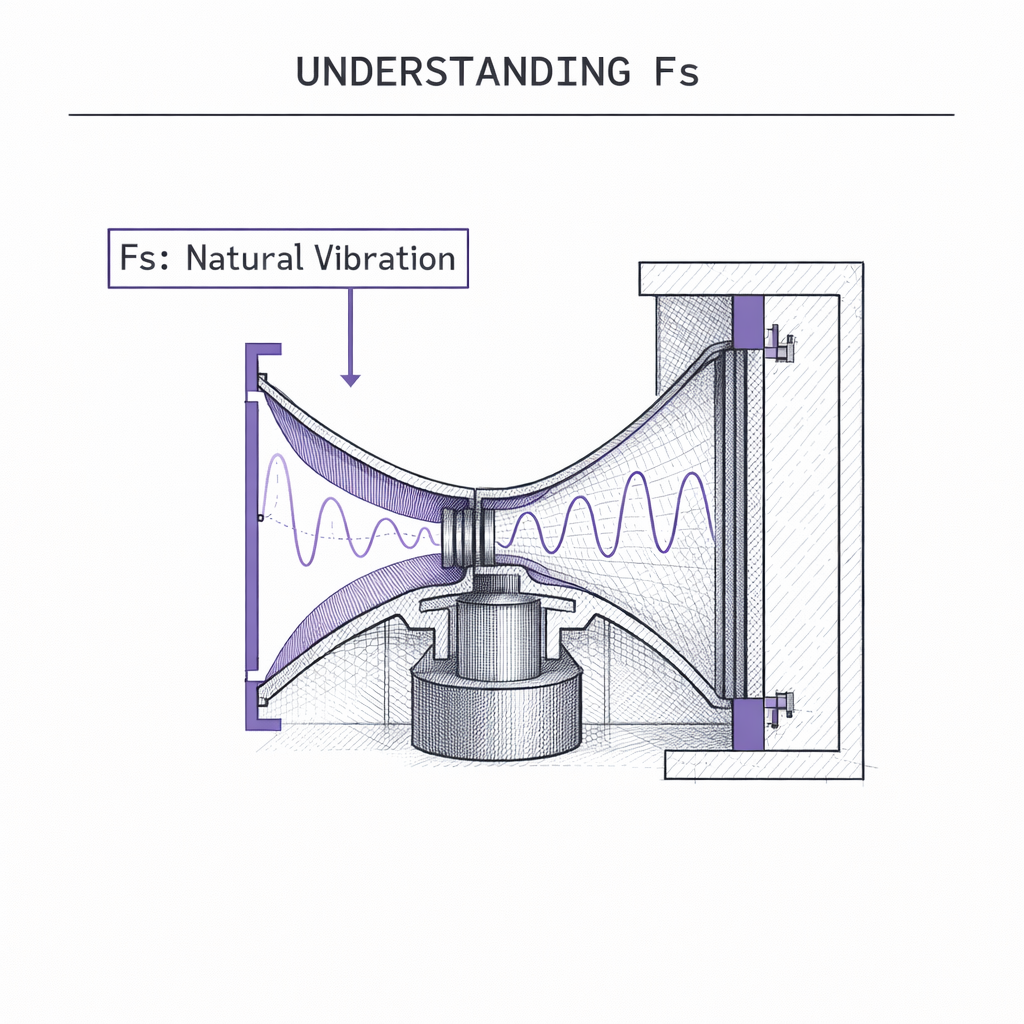
Fs is the free-air resonant frequency of a speaker, measured in Hertz (Hz). It is the frequency at which the moving parts of the speaker (the cone, surround, and spider) naturally want to vibrate the easiest. As a general rule, a lower Fs (e.g., 25Hz) indicates a subwoofer that is better equipped to produce deep, low bass compared to a driver with an Fs of 45Hz.
2. Qts (Total Quality Factor)
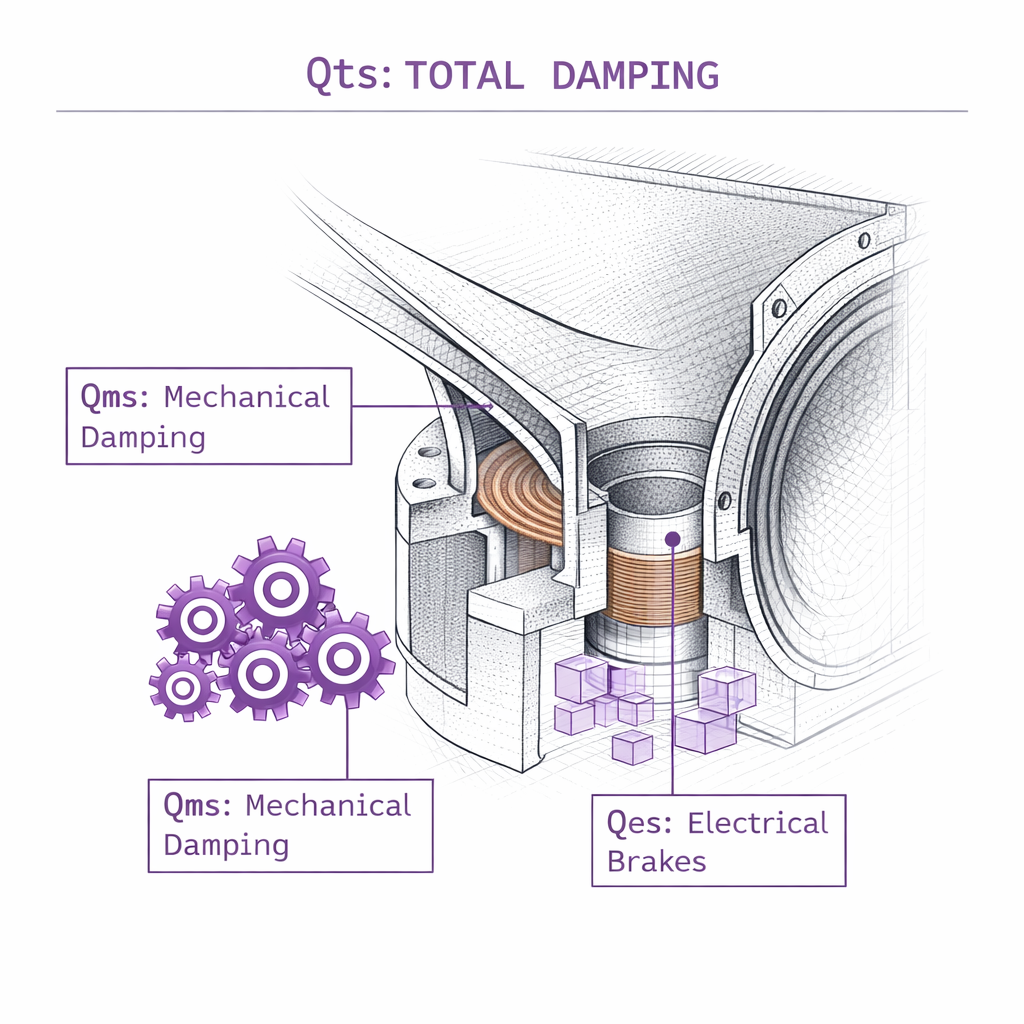
Qts represents the total damping of the speaker. It combines both the electrical damping (Qes) from the magnet/voice coil and the mechanical damping (Qms) from the suspension.
Qts is the ultimate indicator of what type of box you should build:
- Qts below 0.4: Usually best suited for a vented (ported) enclosure.
- Qts between 0.4 and 0.7: Often ideal for a closed (sealed) enclosure.
- Qts above 0.7: Typically used for infinite baffle (free-air) applications.
3. Vas (Equivalent Compliance Volume)
Vas represents the volume of air that has the exact same acoustic "stiffness" or compliance as the speaker's own suspension. It is usually measured in Liters (L) or Cubic Feet (cu. ft.). A higher Vas means the suspension is very loose and compliant, which generally requires a larger physical speaker box to control the cone's movement.
Putting the Specs to Work
Now that you understand what Fs, Qts, and Vas mean, the next step is applying them to your build. By combining these three parameters using the Efficiency Bandwidth Product (EBP) formula, you can precisely determine your optimal box type and volume.
Instead of doing complex math on paper, you can securely save your driver's specs into our T/S Parameters Wizard. Once saved, you can instantly load the driver to test how it behaves in our Subwoofer Box Simulator.
Stop Guessing. Start Simulating.
Got your spec sheet handy? Enter your Thiele-Small parameters into our free web-based toolkit. We'll check the data integrity and help you model the perfect frequency response curve in seconds.
Open the T/S Wizard