Sealed vs. Ported Subwoofer Boxes: Which is Better?
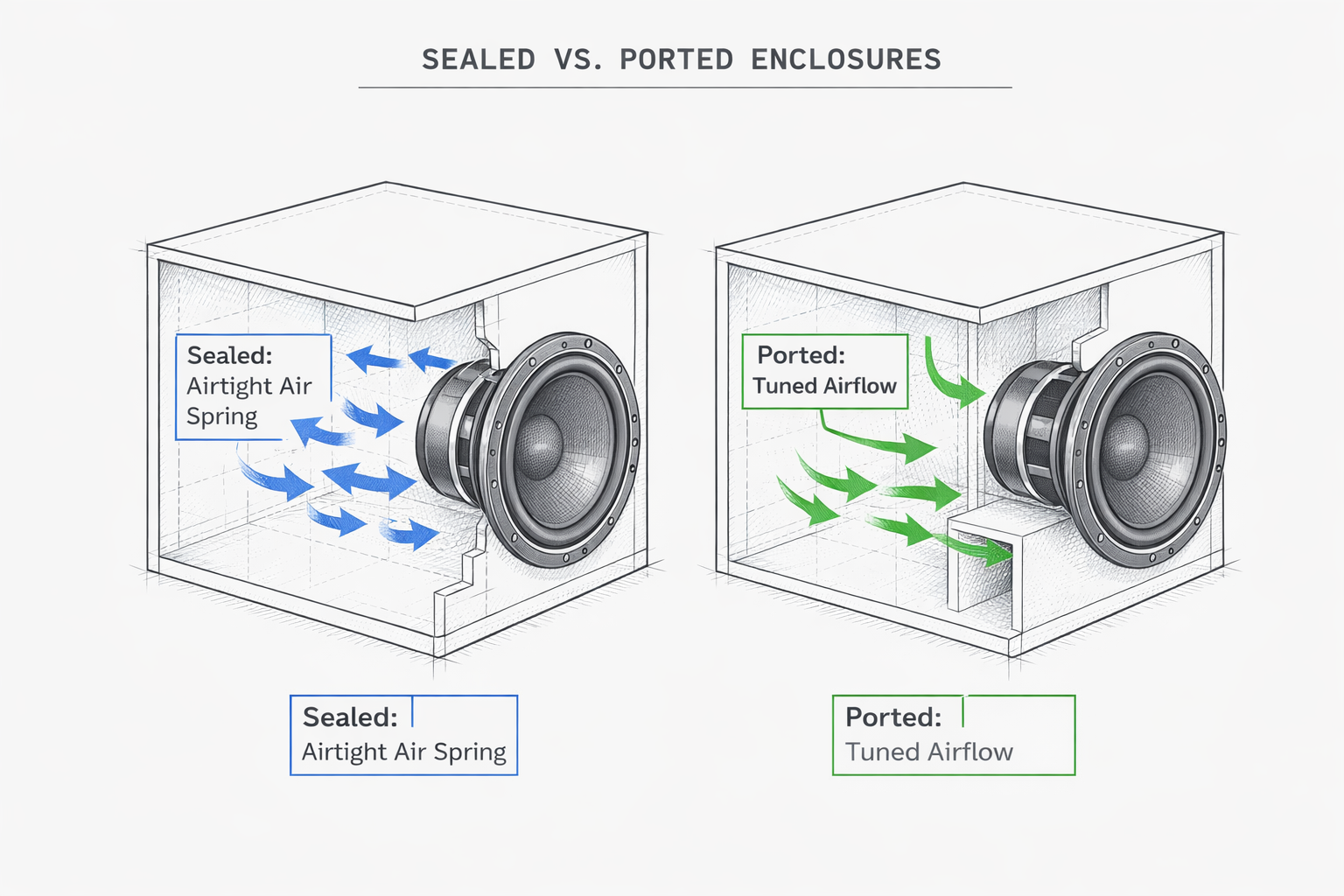
It is the oldest debate in car audio and home theater design. Should you build a tight, closed box or a loud, vented enclosure? The truth is: there is no "best" box, only the right box for your specific subwoofer and listening goals.
The Sealed (Closed) Enclosure
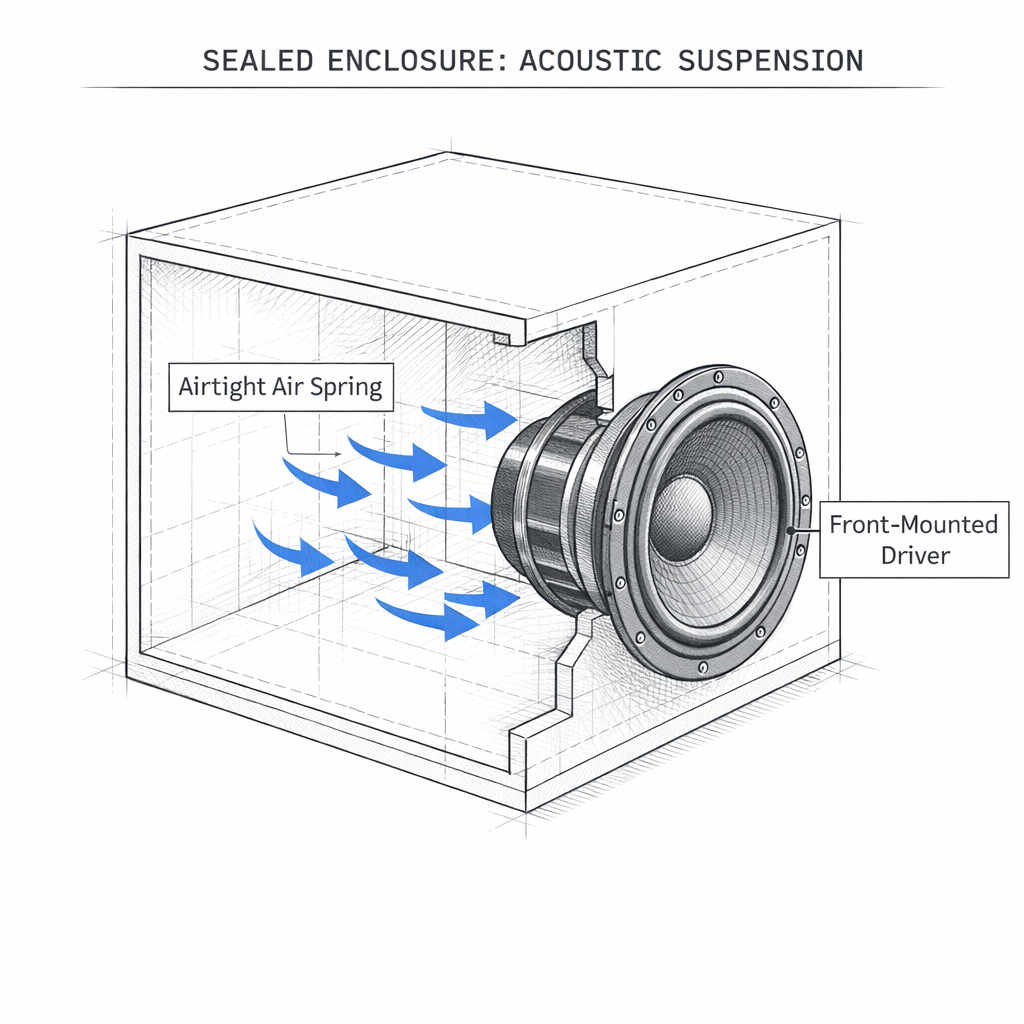
A sealed enclosure is an airtight box. When the subwoofer cone moves inward, it compresses the air inside. When it moves outward, it creates a vacuum. This trapped air acts like a shock absorber, smoothly controlling the cone's movement.
Pros of Sealed Boxes
- Tight, accurate bass: Excellent transient response for fast-paced music (like rock or metal).
- Smaller footprint: They typically require less internal volume than ported boxes.
- Forgiving to build: A slight miscalculation in volume won't completely ruin the sound.
Cons of Sealed Boxes
- Less efficient: They require more amplifier power to achieve high volume levels.
- Less deep bass: They naturally roll off earlier on the lowest frequencies compared to ported designs.
The Ported (Vented) Enclosure
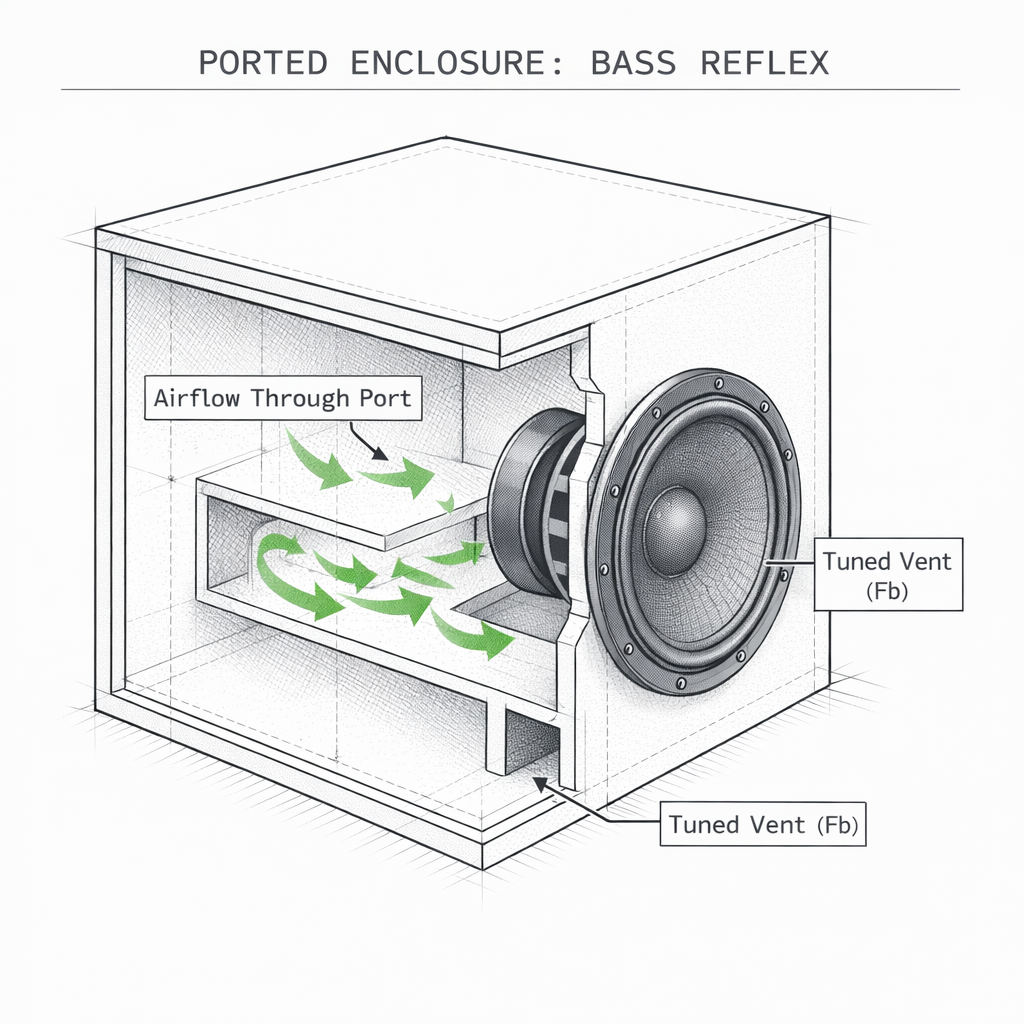
A ported enclosure features a carefully tuned hole or "vent" that allows air to escape. Instead of trapping the air, the port is designed to reinforce the lowest frequencies produced by the back of the speaker cone, adding a massive boost to the bass output.
Pros of Ported Boxes
- Louder output: Noticeably more efficient and louder at the tuned frequency.
- Deeper extension: Perfect for hip-hop, EDM, or explosive home theater movies.
Cons of Ported Boxes
- Larger size: They demand significantly more physical space.
- Complex to design: Getting the port length and width wrong leads to "muddy" sound or annoying port noise (chuffing).
How to Choose? Let the T/S Parameters Decide
You shouldn't just pick a box type based on what music you like. The physical design of the speaker driver dictates what box it needs. You can determine this by looking at the Qts value on your spec sheet.
As a general rule of thumb, if your driver has a Qts below 0.4, it is engineered for a ported box. If the Qts is closer to 0.5 or higher, it will perform much better in a sealed box. You can easily enter your specs into our T/S parameters wizard to let our software determine the best acoustic alignment for you.
Compare Both in Real-Time
Still not sure? Why not look at the actual data? Use our online subwoofer box simulator to overlay a sealed and a ported graph for your specific driver. Once you find the perfect curve, head over to our speaker box calculator to get your exact wood dimensions!