Best Wood & Thickness for Speaker Boxes
A subwoofer generates massive internal air pressure. If your speaker cabinet walls flex even slightly, they absorb acoustic energy and muddy the sound. Choosing the right material and thickness is just as important as the speaker itself.
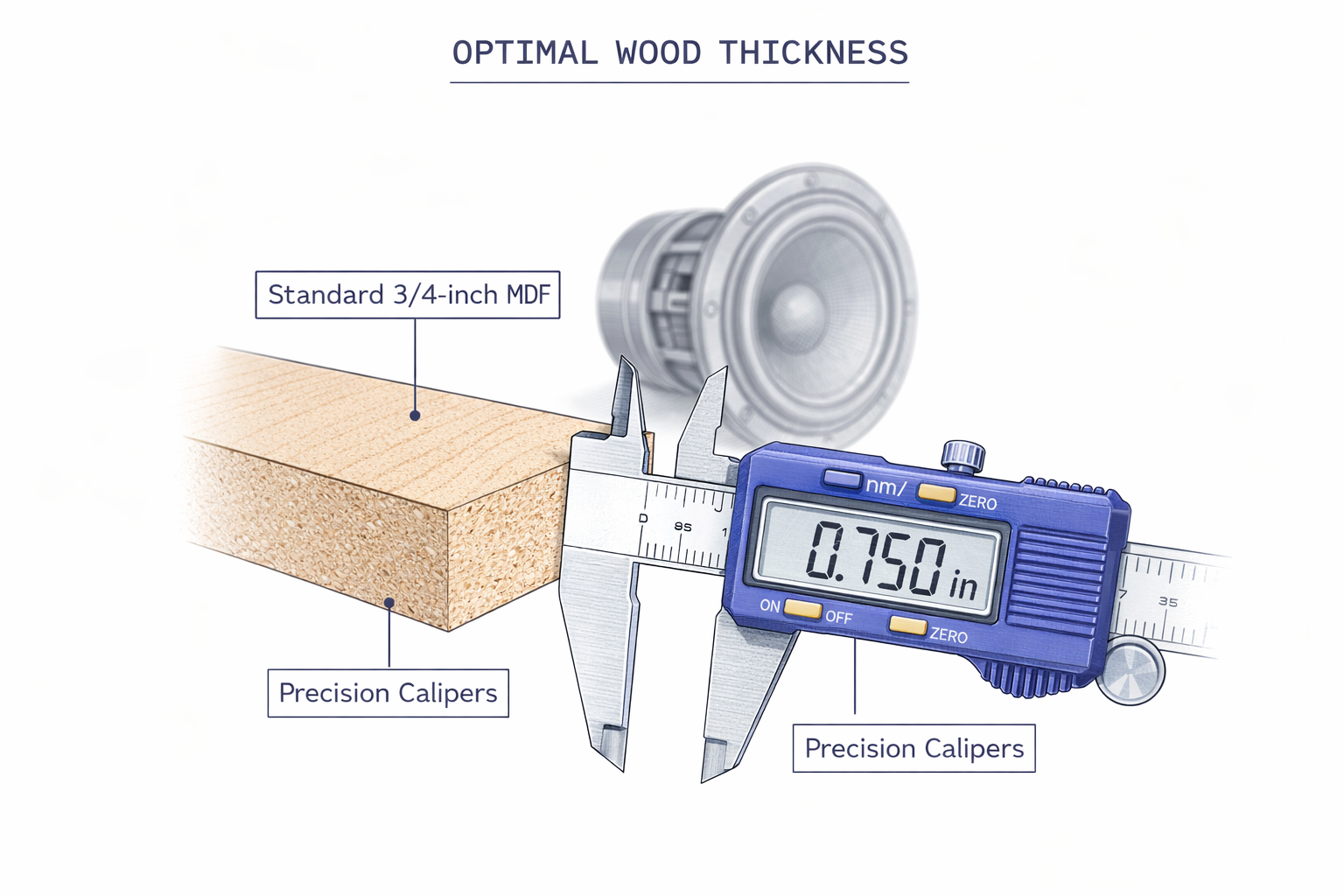
The Golden Rule: 3/4-Inch (18mm/19mm)
For 95% of DIY audio projects-whether it is a 10-inch car audio subwoofer or a pair of high-fidelity bookshelf speakers-the industry standard for enclosure thickness is 3/4 inch (or roughly 18mm to 19mm depending on your region).
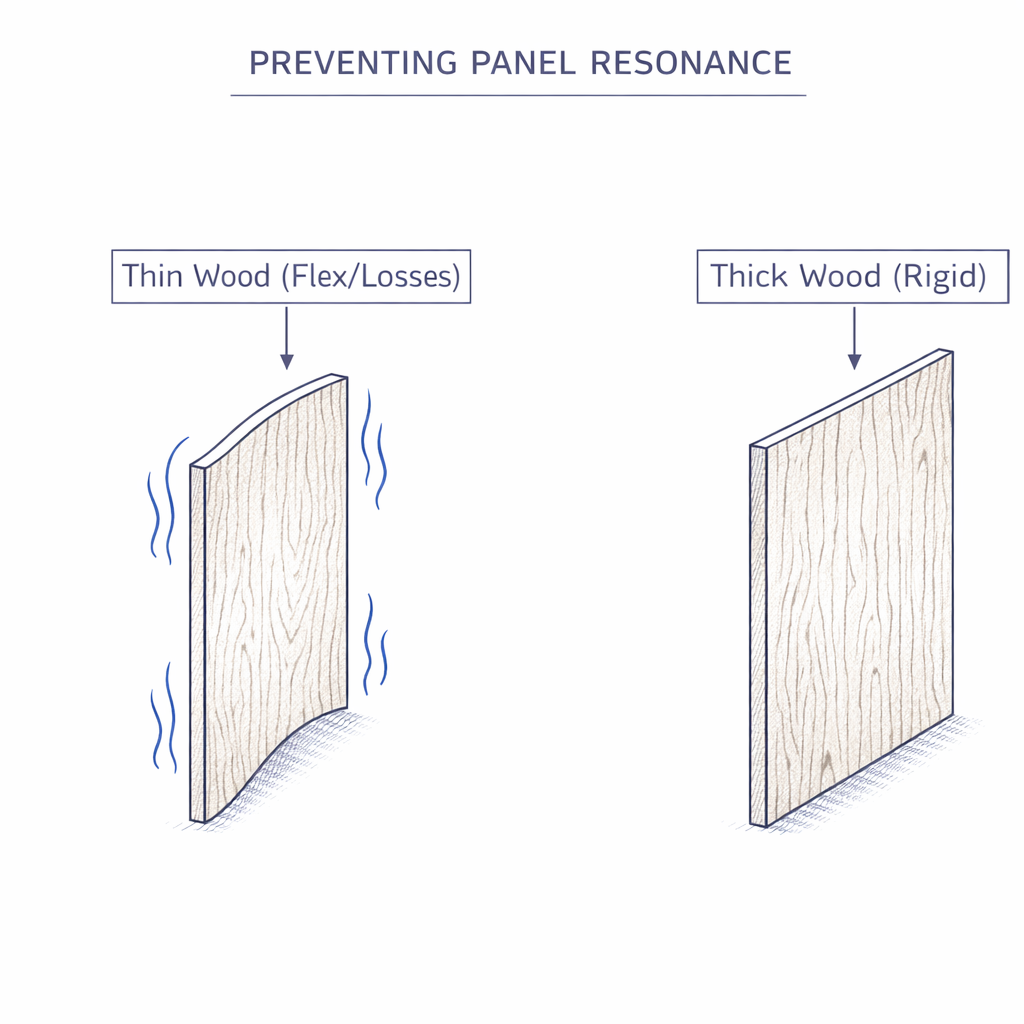
Using thinner material, like 1/2-inch (12mm) wood, will result in panel resonance. The walls will literally vibrate like a drumhead, coloring the music and robbing your subwoofer of its punch. If you use our speaker box calculator, you can easily set your exact material thickness so the internal volume remains perfectly accurate.
MDF vs. Baltic Birch Plywood
The two most popular sheet goods for speaker building are Medium Density Fiberboard (MDF) and Baltic Birch Plywood. Both have distinct advantages depending on your project.
Medium Density Fiberboard (MDF)
MDF is made of fine wood fibers mixed with resin and pressed under high heat. It is incredibly dense, completely uniform, and acoustically "dead" (it does not ring or resonate easily).
Pros: Very cheap, easy to route smooth edges, excellent acoustic properties.
Cons: Extremely heavy, creates toxic dust when cut, and swells like a sponge if it gets wet.
Baltic Birch Plywood
True Baltic Birch is made of many thin layers (plies) of solid birch wood glued together with waterproof resin. It is the material of choice for professional touring PA speakers.
Pros: Much lighter and stronger than MDF, holds screws better, and survives moisture.
Cons: Significantly more expensive, can have hidden voids (unless high-grade), and requires a sharper saw blade to prevent splintering.
When Do You Need Thicker Wood? (Bracing)
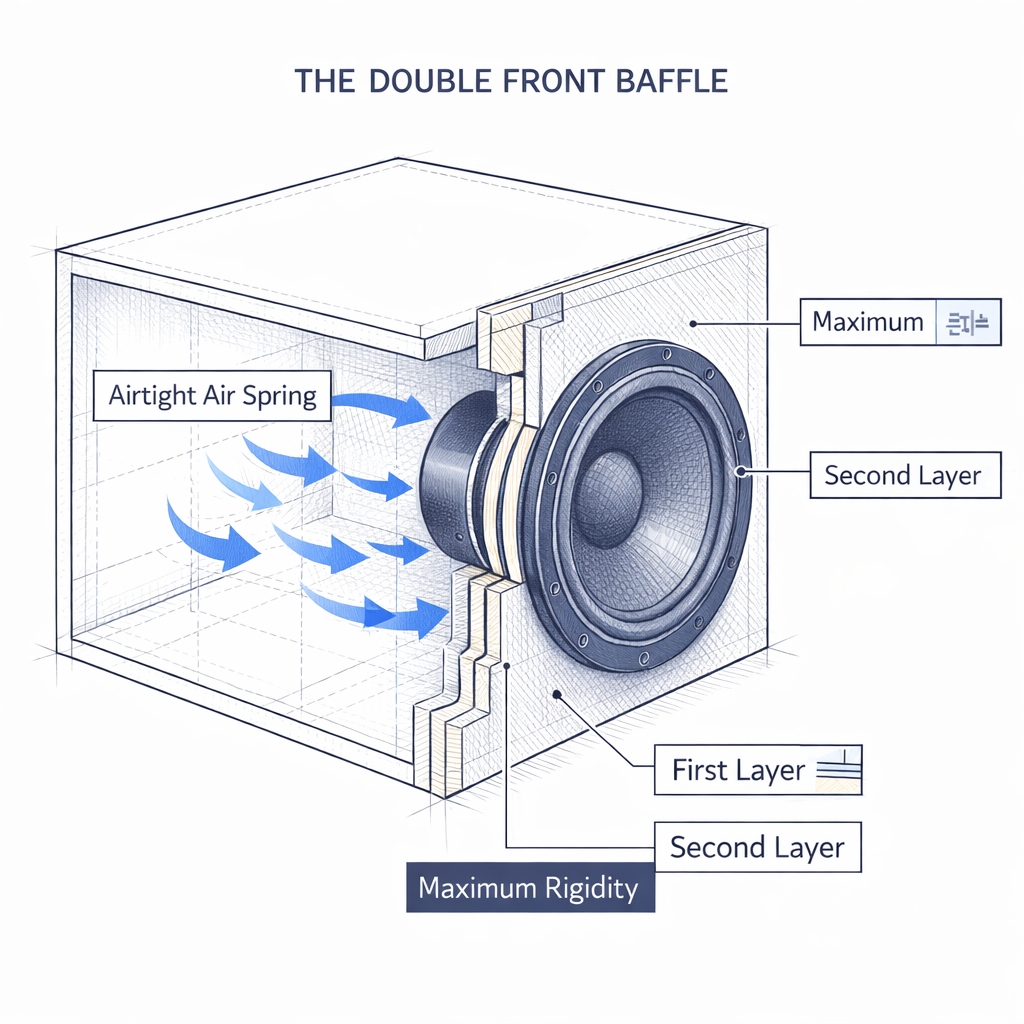
If you are building a massive enclosure for an 18-inch home theater subwoofer pushing 2,000 watts, a single layer of 3/4-inch MDF is not enough. The massive air pressure will cause the large, flat panels to bow outward.
Instead of using incredibly heavy and expensive 1-inch or 1.5-inch wood for the entire box, professional builders use two techniques:
- Double Baffle: Glue two layers of 3/4-inch wood together strictly for the front panel where the heavy speaker mounts. This creates a rigid 1.5-inch thick mounting surface.
- Window Bracing: Glue 3/4-inch strips of wood across the internal span of the box, connecting the opposite walls together. This stops the panels from flexing without adding massive weight.
Plan Your Plywood Cuts Perfectly
Plywood and MDF sheets are expensive. Don't ruin a $80 sheet of Baltic Birch with a bad cut plan. Once you have your exact panel dimensions, enter them into our free plywood cut calculator to minimize waste and generate a printable workshop diagram.